
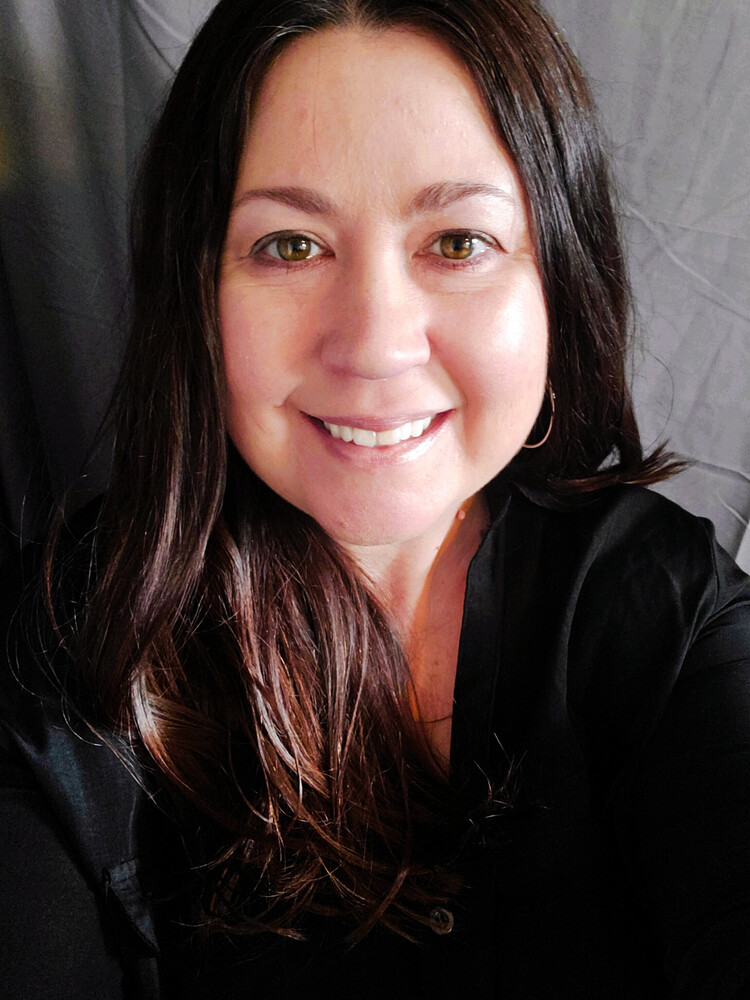
Lisa Prinzi was first introduced to American Sign Language (ASL) in elementary school while learning to effectively communicate with a friend who was deaf. She quickly became fascinated by the language, culture, and deaf community and, by high school, the 1999 PCS alum knew she wanted to become an interpreter and educator.
The experience helped Lisa better understand the value of direct communication and authentic connections. Her own upbringing with parents Chuck and Peg Prinzi, both retired PCS educators, showed her that learning can be joyful and fulfilling. It’s a combination of all these life experiences that led to Lisa’s current role as Assistant Professor in the Department of American Sign Language and Interpreting Education (ASLIE) at the National Technical Institute for the Deaf at the Rochester Institute of Technology (RIT/NTID).
“For as long as I can remember, learning has been a celebrated part of everyday life,” said Lisa, “Because of my parents’ influence, I have come to see learning as a lifelong gift and teaching as the art of guiding others along a path of discovery. I enjoy watching students discover their strengths, overcome challenges, and develop into thoughtful practitioners and future colleagues. Seeing that growth unfold over time is one of the most rewarding parts of my career.”
In 2015, Lisa began her tenure at RIT/NTID as an adjunct instructor, teaching a variety of courses to support department needs. Three years later, she was hired as a full-time faculty member. In her role, Lisa teaches future interpreters, serves as a mentor to students, contributes to curriculum development, and conducts research focused on deaf education, educational interpreting, feedback practices, and student learning. She also coordinates professional development initiatives that support interpreters and educational teams working with deaf students.
“What I love most is working with students. One of my favorite parts of teaching is watching students begin to understand, experience, and internalize the interpreting process,” said Lisa. “Over time, they learn to reflect on their work, identify areas of growth, try new strategies, and then do it all again the next day. Seeing that growth and confidence develop is incredibly rewarding.”
After graduating from PCS, Lisa earned an Associate Degree in Educational Interpreting, a Bachelor of Science in American Sign Language-English Interpretation, and a Master of Science in Secondary Education from RIT/NTID. She later earned a Ph.D. in Educational Culture, Policy, and Society from the University at Buffalo.
Throughout her career, Lisa has worked in a variety of interpreting settings, including community interpreting, performance interpreting, healthcare interpreting, and Video Relay Service (VRS) interpreting. After graduating from college, she worked as a K-12 educational interpreter, providing services for deaf and hard-of-hearing students, their peers, classroom teachers, and other school personnel.
“That experience sparked my interest in both research and interpreter preparation,” she said.
She now conducts research that has practical applications for deaf students, interpreters, and educators. Research allows Lisa the opportunity to learn about others’ experiences and perspectives, which she then applies to her own teaching and professional practices.
While her work can be demanding, Lisa also finds it extremely meaningful. She encourages young adults who are interested in a similar career path to find mentors, ask questions, and not to fear the new and unknown. Always be willing to learn and grow.
“Stay curious and be open to opportunities and experiences you may not have considered yet. My career path took turns and detours that led to some of my favorite memories, most meaningful connections, and valuable learning experiences, while still guiding me to where I am today,” she advised. “Most importantly, keep moving forward and working toward your goals.”